How to Start Your Own Boxing Brand: The Complete Step-by-Step Guide for Entrepreneurs
The global boxing industry has never been more exciting. With the rapid growth of boxing, MMA, fitness boxing, and combat sports training, thousands of athletes are looking for premium equipment that reflects their personality and values. This growing demand has created an incredible opportunity for entrepreneurs to launch their own boxing brand without owning a factory.
Many of today’s successful boxing brands did not begin with large manufacturing facilities or million-dollar investments. They started with a clear vision, a reliable manufacturing partner, and a commitment to delivering quality products.
Whether you dream of creating a premium boxing glove brand, supplying local gyms, building an online business, or becoming an international distributor, this guide will walk you through the entire process of building your own boxing brand for the global audience.
Why Should You Start a Boxing Brand?
The boxing equipment market continues to grow every year as participation in boxing, kickboxing, Muay Thai, MMA, and fitness training increases worldwide year after year. More people are joining boxing gyms, purchasing home training equipment, and looking for high-quality products that combine performance with attractive branding.
Launching your own boxing brand offers several advantages:
- Build a valuable long-term business asset.
- Sell products under your own brand instead of someone else’s.
- Control your pricing and profit margins.
- Expand into international markets.
- Grow from a small online business into a global sports brand.
Unlike many industries, you don’t need to manufacture products yourself. Modern OEM (Original Equipment Manufacturer) and private label manufacturing make it possible to create a professional product line with relatively low initial investment.
Is Starting a Boxing Brand Right for You?
Before you spend a dollar, it’s worth being honest with yourself about where you’re starting from. The founders who succeed aren’t necessarily the ones with the biggest budget – they are the ones who go in with a clear-eyed view of what they have and what they’ll need to build.
Ask yourself: Do I train, coach, or already spend time inside the boxing or combat sports world? Do I have any audience already – a gym, a social following, a fight team? Can I realistically fund a first sample run and a first bulk order? Am I prepared to handle sales and fulfilment myself, not just product development? Firsthand credibility in the sport is a real advantage, but it isn’t required – a genuine understanding of your customer matters more than a fighting résumé. If you’re missing one or two of these, that’s not a dealbreaker. It just tells you what to focus on first and enhance your knowledge in that particular area.
The Boxing Equipment Market Right Now
The boxing equipment industry is in a genuine growth phase. Market research firms don’t fully agree on the exact size of the category – estimates range from under $2 billion to over $5 billion depending on how narrowly “boxing gear” is defined versus broader combat sports equipment – but nearly every major report points the same direction: steady annual growth, projected in tshe range of roughly 6–7% CAGR through the early 2030s, driven largely by rising interest in boxing as both a competitive sport and a fitness activity, along with growing consumer demand for better quality and more durable gear.
A few trends worth knowing as you plan your brand: Fitness boxing and home training continue to expand the buyer base beyond competitive athletes. E-commerce and direct-to-consumer channels are becoming a bigger share of how boxing gear gets sold, which favors small independent brands over big-box retail. Regional demand is shifting – Asia-Pacific in particular is growing faster than more mature markets, which matters if you’re thinking about international sales. None of this guarantees success for any individual brand, but it does mean you’re not trying to build something in a shrinking category. The opportunity is real – the numbers above are directional, so if you’re using them in a pitch deck or investor conversation, pull the latest figures from a current market report rather than relying on this article alone.
Step 1: Define Your Brand Identity
Before selecting products, decide what your brand represents.
Ask yourself:
- Who is your ideal customer?
- Are you targeting professional fighters?
- Beginners?
- Fitness enthusiasts?
- Boxing gyms?
- Women?
- Youth athletes?
- Premium customers?
- Budget-conscious buyers?
Successful brands solve specific problems for specific audiences.
For example:
- Premium competition equipment
- Affordable training gear
- Women’s boxing equipment
- Youth boxing collections
- Eco-friendly boxing products
- Custom gym equipment
The clearer your brand identity, the easier every future decision becomes.
Step 2: Research Your Market
Before investing money, study your competition.
Research:
- Best-selling boxing gloves
- Popular glove weights
- Customer reviews
- Common complaints
- Retail pricing
- Materials used
- Product features
- Packaging styles
Visit online stores, sports retailers, Amazon, and martial arts websites.
Instead of copying competitors, identify opportunities to improve.
Questions to ask:
- What do customers love?
- What frustrates them?
- What features are missing?
- What price points sell best?
This research becomes the foundation of your product development.
Step 3: Decide Which Products to Launch
Many new brands make the mistake of launching too many products.
Start with a focused collection.
Popular starting products include:
Boxing Gloves
Your flagship product.
Choose:
- Training gloves
- Sparring gloves
- Competition gloves
- Kids gloves
- Women’s gloves
Hand Wraps
Affordable and purchased frequently.
Focus Pads
Ideal for gyms and coaches.
Punching Bags
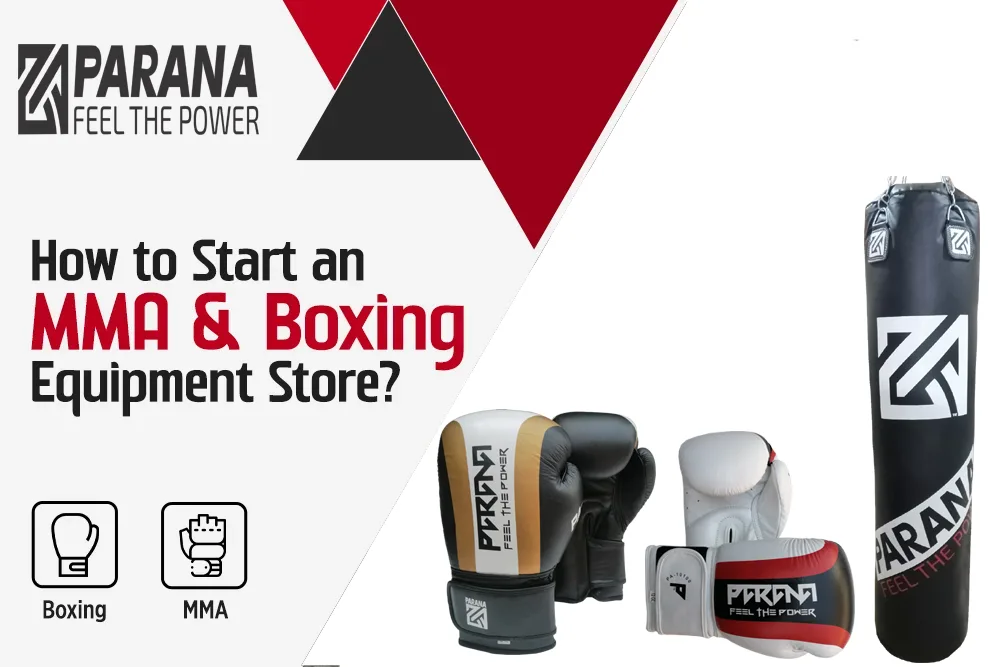
Excellent for commercial gyms and home users. You can start with affordable unfilled heavy punching bags made of vinyl/Tarpaulin, with 3feet to 6feet regular sizes.
Head Guards
One of the most trusted categories for boxing clubs. Better to start with synthetic leather helmets.
Groin Guards
Essential protective equipment. Better to start with clothing and a synthetic leather-made groin guard.
Shin Guards
Perfect if expanding into kickboxing or Muay Thai. Again, get started with embossed shin guards made with synthetic leather.
Gym Apparel
- Hoodies
- Shorts
- Compression wear
- Tracksuits
- T-shirts
Apparel builds strong brand visibility. For a beginner, better to see the season for the quarter you are restocking your apparel.
Legal Basics: Business Registration, Trademarks & Product Liability
Most first-time founders skip this step until something forces them to deal with it. Handling the basics early saves real pain later, and most manufacturers will ask for at least some of this before extending wholesale terms anyway.
Register your business. A simple LLC or equivalent structure in your country separates your personal finances from your brand’s liabilities – important in any business, but especially one selling protective equipment.
Trademark your brand name and logo. Do this as early as you can afford to, in whatever market you plan to sell in first. It’s far easier to register a name before you’ve built recognition around it than to rebrand after a conflict shows up.
Understand product liability. Boxing and protective gear carry real injury risk if it fails. Look into product liability insurance before you sell your first unit, and ask your manufacturer directly about the quality control and testing standards they apply to protective items like head guards and gloves.
Get your import/export paperwork in order. If you’re sourcing internationally, you’ll need to understand duties, customs documentation, and any safety certifications required in your target market before your first shipment lands.
None of this needs to be perfect on day one, but each of these should be handled before you’re taking real customer orders – not after a problem forces the issue. Btw, some manufacturers, like Parana Sports Industries, are well experienced in handling customs all over the world through their experience, so they can solve this problem for you.
Step 4: Find the Right OEM Manufacturer
Choosing the right manufacturing partner is the most important decision you’ll make.
Your manufacturer should offer:
- OEM manufacturing
- Private label services
- Low minimum order quantities
- Product development support
- Quality control
- Competitive pricing
- International shipping
- Zero to low custom duties
- Clear communication
Don’t choose only based on price.
A reliable factory saves you far more money than the cheapest quote.
Ask potential manufacturers:
- What certifications do you hold?
- Can you customize products?
- What are your production lead times?
- What materials do you recommend?
- Can you provide samples?
- What quality inspections are performed?
- What are your payment terms?
- Do you have any specific knowledge about customs in your country? What advantages can I get from working with you?
A professional manufacturer should act as your long-term partner, not simply your supplier.
Private Label vs. Custom OEM: Which Launch Strategy Is Right for You?
Your manufacturer conversation will surface two very different paths, and it’s worth deciding deliberately rather than defaulting into one.
Private label means your manufacturer already has proven, tested product designs – you apply your logo, colors, and branding to an existing pattern. You’re not designing from scratch; you’re branding what already works. Faster to launch, often in a few weeks rather than months. Lower upfront cost – no design or pattern development fees. Lower risk – the fit, comfort, and durability are already proven. Less differentiation – competitors may have access to similar base designs.
Custom OEM means you design the product from the ground up – your specs, your construction, your materials – and the manufacturer builds it to your exact design. Full control over what makes your product genuinely different. Longer development timeline, with more sample rounds before you are ready for production. Higher upfront investment in design and development. Stronger long-term brand differentiation once you’re established.
Neither path is “correct.” Many successful brands start with private label to get to market fast, generate cash flow and real customer feedback, and then move into custom OEM designs for their second or third collection once they know what’s working. If you’re unsure, starting with private label is generally the lower-risk way to test whether your brand idea has real demand before investing heavily in custom development.
Step 5: Develop Your Products
This stage transforms your ideas into physical products.
Typical customization includes:
- Colors
- Logos
- Printed graphics
- Embroidery
- Labels
- Woven labels
- Care labels
- Packaging
- Hang tags
- Cartons
Professional manufacturers will usually create samples before mass production.
Never skip the sample stage.
Test everything:
- Comfort
- Stitching
- Weight
- Foam quality
- Wrist support
- Balance
- Durability
- Branding
- Packaging
Small improvements at this stage prevent expensive mistakes later.
How Much Does It Really Cost to Start a Boxing Brand?
Costs vary a lot by product type, order size, and customization level, but here’s a realistic planning range based on what a small first order typically involves:
Brand design (logo, colors, identity): a few hundred dollars if you use a freelancer, more for an agency. Product design/tech pack: minimal to none if you’re using private label styles; higher for full custom design. Sample production: budget for two to three sample rounds per product before approving bulk. Sample shipping: express courier costs to get physical samples in hand. First bulk production run: your highest single cost, scaling directly with unit count and product complexity. International shipping: varies significantly by weight, destination, and shipping method. Website setup: a basic e-commerce store is a one-time setup cost, with ongoing platform fees. Marketing and content: photography and initial social media content for launch. Packaging: hang tags, labels, and polybags, usually priced per production run.
Put together, a lean, professional first launch is realistic on a modest budget – especially if you start with private label products, keep your first order size conservative, and handle your own marketing content in the beginning. You can always scale your next order once you have real sales data telling you what to invest in further.
Note: exact dollar figures depend heavily on your manufacturer, region, and product mix – get real quotes from 2–3 manufacturers before finalizing your budget rather than planning around estimates alone.
How to Price Your Boxing Products for Profit
Your manufacturing cost is only the starting point for pricing – not the finish line. A common mistake new brands make is pricing too close to their cost of goods, leaving no room for the marketing, returns, and platform fees that come later.
A few practical guidelines: Start from your fully landed cost – product cost plus shipping, duties, and packaging – not just the factory quote. Build in your actual margin target before you set a price, rather than working backwards from what competitors charge. Account for the fees of whichever channel you’re selling through – marketplace fees, payment processing, and any wholesale discount you’ll need to offer gyms and retailers. Leave room to run occasional promotions without going below your break-even point. Revisit pricing after your first production run, once you know your real costs – not your estimated ones.
Getting pricing right early protects your margin as you scale, and it’s much easier to launch at the right price than to raise prices on existing customers later.
Step 6: Build Strong Branding
Many people think branding means a logo.
It doesn’t.
Your brand includes:
- Logo
- Colors
- Typography
- Packaging
- Customer service
- Product quality
- Website
- Social media
- Photography
- Brand story
Customers remember experiences – not just products.
Invest in professional branding from the beginning.
Step 7: Design Premium Packaging
Packaging influences buying decisions more than many entrepreneurs realise.
Good packaging should:
- Protect the product
- Look premium
- Communicate quality
- Include product information
- Display your logo clearly
Custom boxes, branded polybags, tissue paper, stickers, and thank you cards create a memorable unboxing experience.
Step 8: Build Your Online Presence
A professional website builds trust.
Your website should include:
- Homepage
- About Us
- Product pages
- Contact page
- Blog
- FAQ
- Privacy Policy
- Shipping information
High-quality product photography and videos are essential.
Many buyers decide within seconds whether they trust a brand. For an e-commerce brand, build your site on Shopify. It will save you money from remaking your e-commerce site later.
Where to Sell Your Boxing Brand: Choosing Your Sales Channels
Your website is one channel, not your whole distribution strategy. Most successful boxing brands sell across a few of these, rather than relying on just one:
Your own website. Highest margin, full control over the customer experience and your brand’s presentation – but you’re responsible for driving all the traffic yourself. Social commerce (Instagram, TikTok Shop). Fast-growing for fight wear specifically, and a natural fit for a category with such visual, community-driven content. Marketplaces (Amazon, Etsy, eBay, and similar). Large built-in audience, but competitive and fee-heavy – usually better as a secondary channel once your brand is established rather than your starting point. Direct wholesale to gyms and fight clubs. A single gym relationship can put your brand in front of every member who trains there – a strong B2B channel, especially for private label products. Local sports retailers and pro shops. Slower to build, but valuable for regional credibility and in-person discovery.
Most new brands start with their own website plus one social platform, build an audience through content, and expand into gym wholesale once they have some proof that the product sells. Trying to be everywhere at once from day one usually spreads a small team too thin.
Step 9: Create Valuable Content
Content marketing generates long-term traffic.
Write articles such as:
- How to Choose Boxing Gloves
- Boxing Gloves for Beginners
- Boxing Equipment Checklist
- Boxing Training Tips
- PU vs. Genuine Leather Boxing Gloves
- How Boxing Gloves Are Manufactured
Educational content helps customers while improving search engine visibility.
Step 10: Market Your Brand
A great product won’t sell if nobody knows it exists.
Use multiple marketing channels:
- Search Engine Optimisation (SEO)
- Social media
- Google Ads
- Email marketing
- Influencer partnerships
- Boxing gyms
- Martial arts academies
- Trade shows
- YouTube
Focus on building relationships rather than making quick sales.
Common Mistakes to Avoid
Many new boxing brands fail because they make avoidable mistakes.
Choosing the Cheapest Manufacturer
Low prices often result in inconsistent quality, delayed shipments, and disappointed customers.
Launching Too Many Products
Start with a focused collection and expand gradually.
Ignoring Quality Control
Inspect samples carefully and establish quality standards before production.
Weak Branding
Customers buy trusted brands, not generic products.
No Marketing Strategy
Products don’t sell themselves. Marketing is the lifeblood for any business.
Why OEM Manufacturing Is the Smart Choice
OEM manufacturing allows entrepreneurs to focus on:
- Building the brand
- Marketing
- Sales
- Customer service
while experienced manufacturers handle:
- Product development
- Material sourcing
- Manufacturing
- Quality control
- Packaging
- Export documentation
- International shipping
This significantly reduces startup costs and enables faster market entry.
Choosing a Manufacturing Partner for Long-Term Success
Your manufacturer will play a major role in your brand’s reputation.
Look for a partner that offers:
- Years of manufacturing experience
- Modern production facilities
- Consistent quality control
- Flexible MOQs
- Product development expertise
- Transparent communication
- On-time delivery
- International certifications
- OEM and private label services
- Long-term production capacity
A reliable manufacturer grows with your business.
Realistic Timeline: From Idea to First Sale
Here’s an honest week-by-week view of what launching a boxing brand actually looks like, from first decision to first sale:
Weeks 1 – 2: Brand and product definition – lock in your niche, your customer, your product list, and your brand name.
Weeks 2 – 3: Manufacturer outreach -contact your shortlist of manufacturers with your brief, designs, and target quantities.
Weeks 3 – 4: Quotes and sample order – compare quotes, choose a manufacturer, place your sample order.
Weeks 5 – 6: Sample production – your manufacturer builds your samples with your branding applied.
Weeks 6 – 7: Sample review – test fit, materials, stitching, and branding; request any revisions needed.
Weeks 7- 8: Bulk order – approve final samples and place your production order. Weeks 9 – 11: Bulk manufacturing – full production run, with quality checks throughout.
Weeks 11 – 12: Shipping – your order ships internationally and arrives at your location (or your fulfilment partner’s).
Weeks 12 – 14: Launch – website goes live, launch content goes out, first sales come in.
Total realistic timeline: roughly 12–14 weeks from first serious decision to first sale. That’s the honest, professional version – the timeline gets longer if you skip research up front, and it doesn’t get meaningfully shorter without cutting corners on sampling or quality checks, which tends to cost more later than it saves now.
Frequently Asked Questions
How much money do I actually need to start a boxing brand? It depends heavily on product choice and order size, but a lean, professional first launch is achievable on a modest budget -especially using private label products and a conservative first order. Get real quotes before committing to a number.
Do I need boxing experience to start a boxing brand? It helps – it gives you credibility and product insight – but it isn’t required. What matters more is a genuine understanding of your customer and the commitment to execute properly.
Should I start with private label or fully custom products? For a first launch, private label is usually the low-risk, faster path. It lets you test real market demand before investing heavily in custom design. Many brands move to custom OEM products once they have traction.
How do I protect my brand and product designs from being copied? Register your trademark for your brand name and logo as early as possible in your target markets. Product counterfeiters are much harder to protect legally – speed to market and brand loyalty are your best practical defence.
How do I get gyms to stock my products? Start local. Approach gym owners directly, offer a clear wholesale structure, and provide free samples for their coaches to try. A gym that carries your brand puts it in front of every member who trains there.
Which sales channel should I focus on first? Most new brands do best starting with their own website plus one social platform, then expanding into gym wholesale and marketplaces once they’ve proven the product sells.
Final Thoughts
Building your own boxing brand is more achievable today than ever before. With the right strategy, a strong brand identity, high-quality products, and a dependable OEM manufacturing partner, you can create a business that serves athletes, gyms, retailers, and distributors around the world.
Success doesn’t happen overnight. It comes from consistently delivering quality products, earning customer trust, and continually improving your brand.
Whether you’re launching your first product or expanding an existing sports business, investing in premium manufacturing, thoughtful branding, and long-term customer relationships will help your boxing brand stand out in a competitive market.
The journey begins with one decision: turning your idea into a product that athletes are proud to use.
Disclaimer:
The following content provides general market data and research on the combat sports industry, aimed primarily at business owners and industry professionals. This information is intended for a broad understanding and may not be tailored to your specific context or location. As this data serves a diverse audience, it is essential to conduct your own research, considering local factors that could affect your situation before making any decisions.